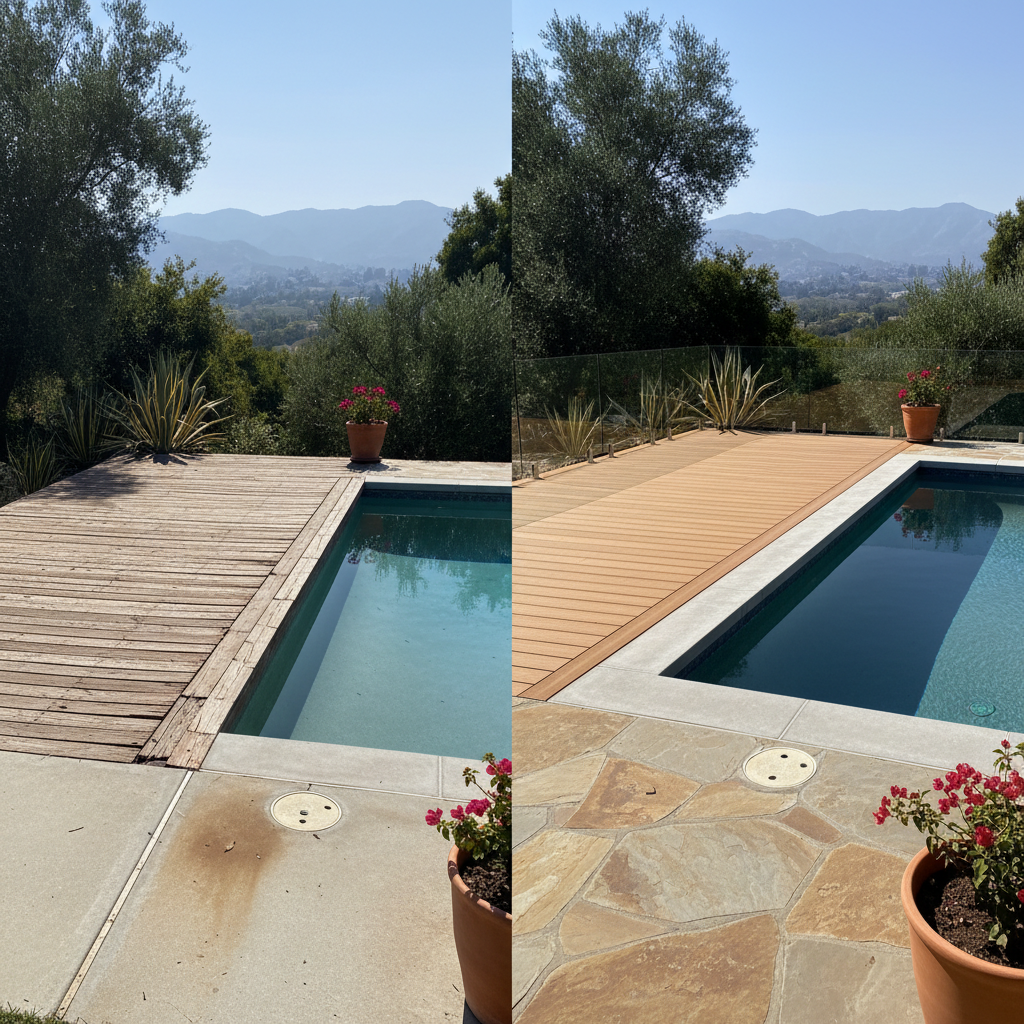
So, you're finally getting that pool deck done, or maybe you're upgrading an old one. That's exciting! But then you hit the big question: what material should you use? For most folks around Pasadena, it usually comes down to two main contenders: pavers or stamped concrete. Both can look great, but they've got some pretty big differences you need to know about before you commit.
Cost: Upfront vs. Long-Term
Let's talk money first, because that's usually the first thing on anyone's mind. Generally speaking, stamped concrete often costs less per square foot upfront than pavers. It's a single pour, and while there's labor involved in stamping and coloring, it can be quicker to install than laying individual pavers. Think of it like getting a custom-designed floor in one go.
Pavers, on the other hand, are individual units. They need more labor; someone has to lay each one by hand, level them, and then sweep in joint sand. So, you'll typically see a higher initial quote for a paver deck. But don't just look at that sticker price; we'll get to why that initial difference might not tell the whole story.
Durability & Maintenance: The Real Test
This is where the rubber meets the road, especially with our crazy Pasadena weather. We get those hot, dry summers that bake everything, and then occasional heavy rains that can really test your outdoor surfaces. And let's not forget the ground movement we sometimes experience around here.
Stamped Concrete: It's a solid slab. If it's installed right, it's tough. The downside? Concrete cracks. It's not a matter of if, but when. Hairline cracks are common, and while they can be minor, bigger cracks can be an eyesore and a tripping hazard. Repairing stamped concrete can be tricky too. It's hard to match the color and pattern perfectly, so you often end up with a noticeable patch. You'll also need to reseal it every few years to protect the color and surface.
Pavers: These guys are designed to move. Because they're individual pieces, they can flex with minor ground shifts without cracking. If one gets damaged – say, a heavy planter falls on it – you can usually just pop out the broken paver and replace it with a new one. No big deal, and it's almost impossible to tell it was ever repaired. Maintenance involves sweeping or blowing off debris, and occasionally refilling the joint sand. Sealing isn't always necessary, but it can help protect the color and prevent weeds.
Appearance & Style: What's Your Vibe?
Both options offer a lot of aesthetic flexibility, which is great for matching your home's style, whether you're in a classic Craftsman in Bungalow Heaven or a modern build up in Linda Vista.
Stamped Concrete: You can get some incredible looks with stamped concrete. It can mimic natural stone, brick, or even wood. There's a huge range of colors and patterns. The finish is consistent, giving a very uniform and often elegant look. The patterns are impressed into the concrete, so it's a continuous surface.
Pavers: Pavers offer a more natural, textured look. You can choose from concrete pavers, natural stone like travertine or flagstone, and a huge variety of shapes, sizes, and colors. You can mix and match to create unique patterns and borders. The individual joints add a distinct character that many people love. Plus, the color tends to be integral to the paver itself, meaning it won't just wear off the surface.
My Take: What I Recommend for Pasadena Homeowners
Look, I've installed a lot of both over the years at Pasadena Deck & Porch, and I've seen how they hold up. For most homeowners in our area, especially around a pool, I lean towards pavers. Here's why:
- Flexibility: Our soil can be a bit unpredictable. Pavers handle minor ground movement and temperature fluctuations much better than a solid concrete slab.
- Easy to Repair: If something goes wrong, or you need to get to underground utilities, repairing or replacing pavers is a breeze compared to trying to patch stamped concrete.
- Slip Resistance: Many pavers offer excellent slip resistance, which is crucial around a pool where things are always wet. You can also get permeable pavers that help with drainage, a big plus during our rainy season.
- Long-Term Value: While the initial cost might be higher, the longevity and ease of repair for pavers often mean lower long-term costs and less hassle. They just stand up to the elements better here.
Don't get me wrong, stamped concrete can be beautiful and works well in certain applications. But for a pool deck that's going to see a lot of sun, water, and foot traffic, and needs to last for decades, pavers usually win out in my book. They just make more sense for the way we live and the conditions we deal with here in Southern California, don't you think?
Ultimately, the best choice depends on your specific needs, budget, and aesthetic preferences. But hopefully, this gives you a clearer picture of what you're getting into with each option. If you're ready to talk specifics for your backyard, give us a call at Pasadena Deck & Porch. We're happy to walk you through it.